
Winning fights in ARC Raiders is not about taking every fight. Use cover to find information before committing, keep a route to safety, and fight only when the target, timing and cost make sense. In PvPvE, a good duel can turn into a lost raid if a Snitch calls reinforcements or another Raider hears the shooting.
This ARC Raiders combat guide focuses on the decisions that keep a run alive: third-person peeking, angles, stamina, third parties, weak points, shield choice and the new Frozen Trail enemies. It reflects Update 2.2 and avoids made-up win rates or “guaranteed” movement exploits.
ARC Raiders Combat Tactics: Quick Decision Guide
Before shooting, read the room. The goal is to choose an advantage you can actually use, not to prove you can win a fair duel.
| Situation | First Move | Common Mistake |
|---|---|---|
| You spot a Raider first | Find hard cover and a second angle; check whether you have an exit | Starting an open-ground trade simply because you saw them |
| You hear another fight | Check distance, ARC presence, loot carried and likely escape paths | Automatically sprinting in as a third party |
| A Snitch or loud ARC has noticed you | Break sightlines and prepare for additional threats | Continuing to loot in the same exposed location |
| Your shield is low and you have valuable loot | Disengage, heal and rotate toward extraction | Spending the last consumables on a nonessential duel |
| An armored ARC controls the route | Look for a bypass, safe firing angle or suitable anti-armor tool | Dumping ammunition into intact plating |
| You are holding an extraction | Watch entry angles, reserve a route inside and avoid unnecessary gunfire | Standing in front of the terminal with no cover |
A practical test: if a fight would consume your healing, draw a stronger ARC or leave you exposed to the only active exit, winning the duel may still be the wrong decision. Carry a kit you can afford to replace and do not fight to protect an item that is already secure in a Safe Pocket.
Build a Kit for Your Actual Combat Plan
A better position helps more than an expensive gun, but a kit without enough healing, ammunition or the right shield can still lose an otherwise good fight. Compare a ready-made loadout with a DIY weapon choice.
Third-Person Camera: Peek for Information, Not Free Damage
In ARC Raiders, you can check around a corner with the over-the-shoulder camera before showing much of your body. Shoulder swapping helps you see the useful side of cover, but it does not move your physical hitbox or make a shot safe when your weapon is obstructed. Confirm the firing angle before exposing yourself.
Use the peek-shoot-reset rhythm
- Approach from the side where a wall, doorway or large object blocks hostile fire.
- Choose the camera shoulder that lets you inspect the next angle with the least movement.
- Spot the enemy, decide whether you can fire or should change position, then expose only long enough for your intended burst.
- Return to cover to reload, heal, listen and check whether the opponent has moved.
Do not keep re-peeking the identical angle after taking damage. An opponent who knows exactly where your head will appear no longer has to search for you. Force them to look in two directions or break contact entirely.
Current patch detail: Update 2.1 added a brief animation cooldown when repeatedly switching shoulders. It also adjusted footstep audio. Treat old “instant shoulder spam” clips as movement demonstrations, not proof of a repeatable combat advantage. Controls differ by platform and can be remapped; check your settings before relying on a particular key.
Positioning, Cover and Movement That Actually Matter
Hard cover beats a beautiful viewpoint
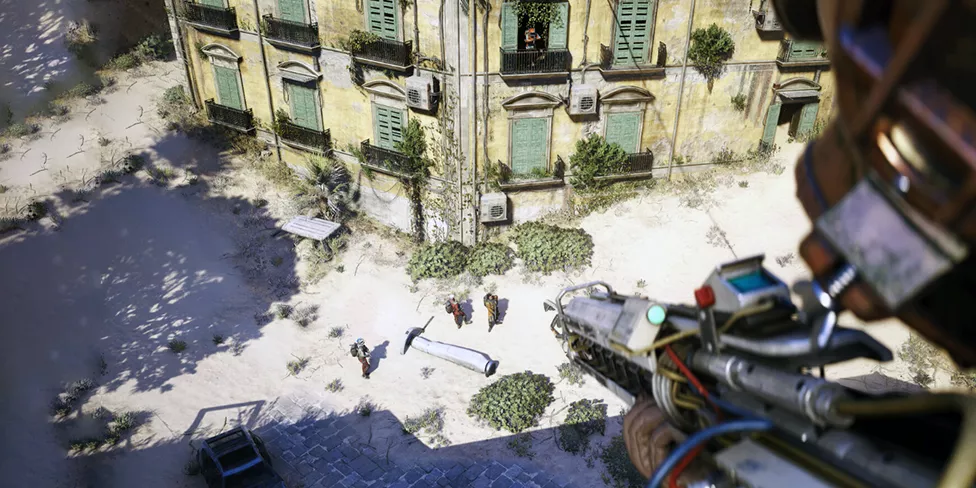
High ground can give you early information and cleaner angles, but a rooftop without a retreat route may become a trap. Hard cover is something that actually blocks shots, such as a thick wall or large structural object. Bushes, smoke and dim light can hide your movement but do not reliably stop damage.
Before a push, identify a near position, a fallback position and the path between them. When the opponent uses explosives to force you out, move toward your backup instead of trying to win a damage trade while trapped behind one object.
Spend stamina on your escape, not on showy combos
Dodge rolls, slides and climbs help you cross dangerous space or break an ARC attack. They also change your rhythm and drain stamina. Do not base an entire fight on an unverified “roll animation cancel” or the claim that a specific slide-shoot sequence always fires faster. Practice movement timing in normal raids and keep enough stamina to leave the fight.
Frozen Trail added Scrambling for brief climbs on steep slopes and automatic sliding after prolonged tumbling. Update 2.2 fixed certain ARC shots that tracked sliding Raiders too accurately. These changes help movement feel more consistent, but neither sliding nor climbing guarantees protection.
Choose a mobility tool with a purpose
The Grappling Hook offers vertical traversal and a new escape or flank option. The Snap Hook is a more committed burst-movement tool; in 2.0 its maximum range was reduced from 20 m to 18 m, while power and durability costs increased. Carry one because it solves a route problem you expect to face, not because movement gadgets automatically improve your gunfights.
Heavy Shield trade-off: Update 2.0 reduced its movement penalty from 15% to 10% and slowed durability decay. Heavy protection is now less punishing for movement, but shield weight, charge and augment compatibility still matter. A Light Shield can be preferable for a fast escape-oriented run; heavier protection may be worth it for holding an angle under sustained fire.
When to Push, Third-Party or Disengage
Hearing gunfire gives you information, not an obligation to attack. A third party may catch two damaged Raiders, but it can also enter the exact line of sight another team is watching. Ask whether you will arrive with cover, ammunition, healing and a way out.
| Choice | Good Signs | Warning Signs |
|---|---|---|
| Push | One opponent is isolated, you have cover to close distance, your kit fits the range | Multiple unseen angles, no stamina, ARC already attracted to the area |
| Third-party | Clear information about both teams, a safe flank, quick access to an exit | Only distant audio, no view of the fight, high-value loot already in your bag |
| Hold | Enemy must cross your sightline, you can keep hard cover, time is on your side | Enemy can throw explosives behind your cover or rotate onto your flank |
| Disengage | Repair or extraction objective already completed, supply deficit, third threat approaching | You must cross the enemy’s open firing lane to retreat |
Example: you hear a short fight near a busy Buried City crossing. If you cannot identify how many Raiders remain, circle to a protected observation angle instead of running straight toward the noise. If an ARC joins the fight, use that distraction to leave or move into a stronger position. You can always choose not to fight.
Audio, Stealth and Reading a PvPvE Fight
Footsteps, gunshots, recharging shields, doors, zipline movement and ARC weapons can reveal activity. They do not reveal a complete map of the enemy team. A sound through several floors might come from a different level than you expect; one gunshot does not prove the shooter stayed in the same place.
Use sound together with camera information, pings, visible ARC behavior and teammate callouts. In 2.1, Embark balanced outdoor footsteps and their volume across different surfaces. Avoid copying older audio-range charts or exact “two-second reaction advantages” into your play.
Do not confuse ARC pressure with a Raider opening
An ARC targeting a player may reveal their position and force them out of cover. It may just as quickly switch attention to you. When you see incoming fire from a machine and a Raider at once, identify which attack can hit you first, use solid cover against both, and choose a route that does not put you between them.
If an alarm-calling ARC is nearby, consider whether a silent detour saves more resources than a quick kill. Firing at every machine can create noise that draws players into what looked like a simple PvE encounter.
PvP Combat: Shields, Grenades and Angle Control
Shields mitigate a portion of incoming damage; they are not simply a second health bar. You can take health damage while a shield still has charge. Between encounters, check both health and shield status instead of relying on the shield indicator alone.
A good attacking sequence is simple: gather information from cover, make the opponent give up a useful position, then move while they are responding. A frag grenade or other displacement tool is helpful when an enemy holds one small room. Smoke can conceal a crossing or a revive, but its edges are not bulletproof and players may still fire through the cloud. A mine can guard a known approach but does not replace someone watching the flank.
Counter a third-person corner holder
Do not walk directly into a camera peek the opponent already owns. Break the angle with utility, move so they must expose themselves to see you, or rotate to another exit. If you must cross, coordinate the distraction with a teammate and keep the crossing brief.
Weapon choice matters here, but a tier list does not decide every engagement. A slow hand cannon is effective when you can peek and reset. An automatic weapon may be easier for a pressured close-range hold. Use the current weapon tier list for detailed gun comparisons rather than guessing that rarity alone determines a fight.
PvE Combat: How to Fight ARC Without Wasting Your Kit
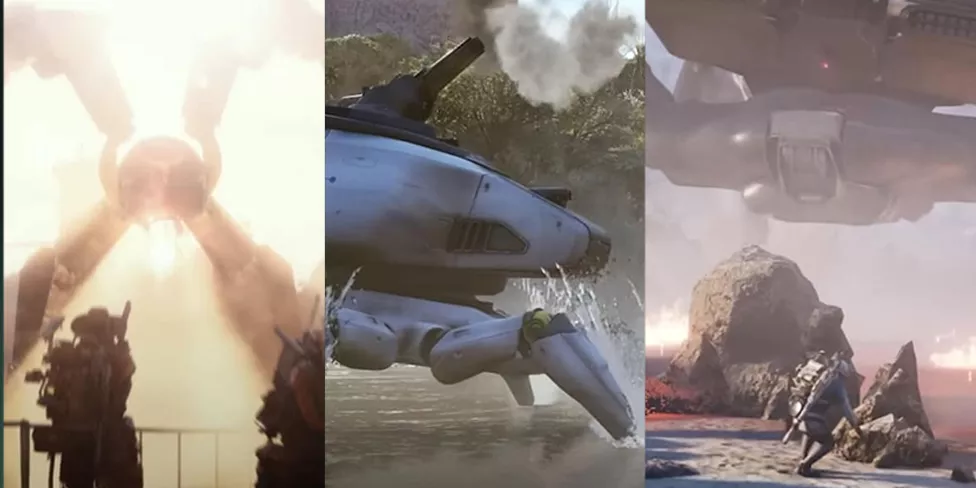
Against ARC, the correct target is often an exposed component, thruster, joint or vulnerable section rather than intact armor. The details vary by machine and weapon. Do not assume every yellow-looking surface applies the same damage multiplier, and do not use a rigid distance chart for every encounter.
| ARC Threat | What It Does to Your Fight | Practical Counter |
|---|---|---|
| Snitch | Can turn a small engagement into a much larger problem | Break sightlines or deal with it before committing to noisy looting |
| Hornet / Wasps | Flying pressure interrupts aimed shots and movement | Use roof or wall cover, then shoot exposed components when the angle is clear |
| Rocketeer | Longer-range explosive pressure can deny open ground | Stay close to sturdy cover and rotate between attacks |
| Leaper | Closes distance quickly and punishes exposed reloads | Preserve a dodge route, avoid a straight open-ground retreat and use its attack recovery |
| Bastion | Armor makes frontal damage inefficient | Seek angles on vulnerable parts, bring suitable armor damage or take another route |
| Bombardier | Explosive volleys make static positions dangerous | Leave the predicted impact area, use terrain to break the line and counter during recovery |
| Queen / Matriarch | Large encounters commit time, ammunition and attention | Enter prepared for the objective, manage adds and preserve an extraction plan |
| Bully | Pressures your position aggressively | Use hard cover and shoot during safe openings instead of trading head-on |
| Skulker | Ambushes and retreats to another angle | Keep track of its movement and avoid tunnel vision on a louder target |
| Hydra | Frigate turret can pressure multiple Raiders | Use separate cover positions and coordinate damage without assuming it will focus one player |
Explosive weapons changed in 2.0: Embark reworked ARC explosive damage. Weapons such as the Hullcracker now deal substantially more damage to armor plates but less to fragile parts than before. In practice, the smartest target depends on your ammunition and whether you want to strip armor or attack a weak component. The official Frozen Trail patch notes explain the balance change.
Frozen Trail Enemies: Bully, Skulker and Hydra
Bully: survive the rush first
The Bully is built to take space. When it begins pressuring your position, the dangerous move is often a straight backward sprint with no object between you and its attack. Work around hard cover, watch the attack sequence, and fire when you can do so without losing your escape path. If another Raider appears, breaking contact is often better than trying to finish the machine.
Skulker: watch the edges of the fight
The Skulker prefers opportunistic attacks and retreats. It can punish you while you are staring at a Bully or checking a crate. Watch its last visible position, use nearby cover when it lines up a shot, and avoid chasing it through an unknown doorway into a second threat.
Hydra: prepare for split pressure on the Frigate
Hydra is a different problem. Its turret sections can attack more than one Raider, so spreading a squad does not mean everyone is safe. Update 2.2 fixed how Hydra distributes its attacks and raised base damage to compensate. Assign separate covered positions, call which section is attacking and avoid committing the whole group to one exposed side of the vessel.
Remember that the Frigate is a Map Condition, not a permanently available mission in every raid. Other Raiders may contest entry and loot. If the ship is your objective, check the current condition schedule, bring a real loadout, and plan a route out before the first difficult room.
Plan the Frigate Fight or Choose a Guided Clear
Hydra and the crowded Frigate interiors make preparation and extraction as important as damage. Choose the current Frigate clear offer if you need help with that specific activity, or plan your own exit before boarding.
Solo vs Squad: Adjust the Plan, Not Just the Gun
Solo combat
As a solo Raider, you cannot count on a teammate covering the reload, finding the flank or reviving you. Prefer fights that let you disengage, and avoid spending your entire inventory on one opponent when your real goal is a blueprint or quest item. A flexible weapon, healing, a shield you can move with and one escape utility often make a better run than two expensive guns with no recovery supplies.
Duo and trio combat
Team play works when each Raider owns a clear responsibility. One watches the main sightline; another controls a flank; the third can scout or manage the next move. Do not have everyone throw utility, loot or heal at once. Use short calls such as “Bully pushing the stairs,” “Raider above west doorway,” and “rotating to north cover.”
Before a coordinated push, say who is applying pressure, who is moving and which angle remains covered. If the first player is downed, protect a revive only when the location can be defended; an instant panic revive can turn one loss into a full squad wipe. For more detailed role and callout patterns, see the ARC Raiders Squad Coordination Guide.
Build a PvPvE Loadout Around the Job
“Best loadout” means very little without a goal. A raid to clear heavy ARC asks for different ammunition and utility from an indoor loot run where you may want to leave without firing at another player.
| Your Goal | Weapon and Kit Principle | Bring / Avoid |
|---|---|---|
| Solo loot run | Affordable all-round weapon; prioritize mobility and a clean exit | Healing and a usable shield; avoid overpaying for a fight you may skip |
| Close-quarter PvP | A controllable short- or mid-range gun suited to the rooms you expect | Displacement or smoke utility; plan how to escape a hard corner |
| Heavy ARC objective | Reliable anti-armor damage, sufficient ammo and cover between attacks | Repair and healing supplies; avoid treating boss rooms like fast loot stops |
| Frigate or contested event | Range flexibility, squad communication and enough healing for repeated pressure | Plan entry and extraction; avoid assuming PvE-only matchmaking is available |
Pick your augment and shield for what you actually intend to do. Heavy Shields have a smaller movement penalty after Update 2.0, but an incompatible augment will not magically allow one to be equipped. Amplified Weapons are another 2.0 system; choose their researched perks based on the playstyle and ammunition cost, not only the label on the weapon. Recipe and unlock details belong in the Advanced Crafting Guide.
Three Combat Mistakes That Lose Valuable Raids
- Winning the wrong fight. If the enemy is not blocking your objective or exit, the Coins, ammo and extraction risk may outweigh anything they carry.
- Holding one angle forever. A player can rotate or use explosives; ARC can pressure from another side. Build a fallback before your first shot.
- Ignoring the exit after success. Finishing an ARC objective or collecting the item you needed is not the same as bringing it back to Speranza. Check active extraction routes while you still have choices. The Escape Routes guide covers the mechanics in detail.
ARC Raiders PvPvE Combat FAQ
Should I always push when I hear gunfire?
No. Check how many teams may be involved, whether ARC are active, the distance to cover and the loot you would risk. Sometimes the best third-party play is to leave while everyone else is distracted.
Does shoulder swapping make me impossible to hit?
No. It changes your camera view, not the physical protection of your body or the shot’s path. Repeated swaps also received an animation cooldown in Update 2.1.
Is high ground always the best position?
No. High ground helps when it provides sightlines, hard cover and a retreat. An exposed roof with one obvious ladder may be worse than a lower doorway with two exits.
Does a Heavy Shield make me too slow for PvP?
Not necessarily. Update 2.0 reduced its movement penalty to 10%, but the protection still has trade-offs. Choose a compatible augment and compare it with the mobility you need.
What is the safest way to fight armored ARC?
Use sturdy cover, inspect visible vulnerable parts and bring enough suitable ammunition. For a loot run, a detour may be safer than engaging a Bastion or a major boss.
Did the Hullcracker change in Frozen Trail?
Yes. Update 2.0 reworked explosive damage against ARC, increasing the effectiveness of explosive weapons against armored plates and reducing it against more fragile parts compared with the previous formula.
How do I counter a Bully?
Keep solid cover between you and its pressure, move when it commits to an attack and shoot during safe recovery windows. Avoid turning the fight into a long, exposed sprint.
How do I fight a Skulker?
Track its movement and watch for the next attack angle. Use cover between bursts and do not chase it blindly while another ARC or Raider can attack you.
Can Hydra attack more than one teammate?
Yes. Its sections can distribute attacks across different targets. The 2.2 update corrected this behavior and adjusted its damage, so coordinate covered positions rather than relying on one player to absorb every shot.
Do I need two weapons in every raid?
No. A solo scavenging run may benefit more from healing and inventory space; a longer contested event can justify a second weapon for a different range or ammunition role. Your goal determines the kit.
Before Your Next Engagement
- Check your shield, health, stamina and ammunition before entering a contested area.
- Find the first hard-cover position and one fallback.
- Use the camera and sound for information, not as proof an angle is safe.
- Decide if killing the enemy is necessary for your objective.
- Account for nearby ARC and other Raiders before a third-party push.
- After getting the item you came for, switch from combat mode to extraction mode.
Good ARC Raiders PvPvE tactics keep you in control of the choice to fight. The useful skill is not winning every duel; it is knowing which fights improve the run and which ones put the loot at risk.