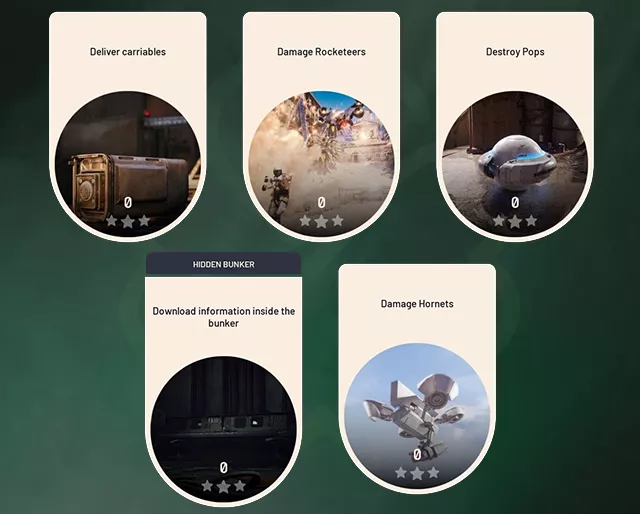
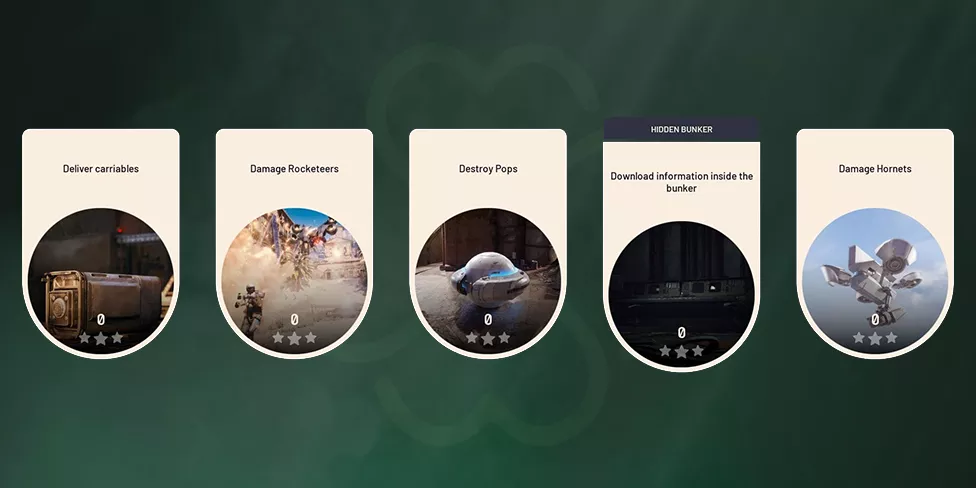
Climbing from Rookie to Hotshot in ARC Raiders is not about reaching one magic score. You are ranked against a group of Raiders at your current Trials rank. Your weekly total comes from your best extracted score in each of five challenges; your position at the end of the competition determines promotion, staying put, or demotion. Start by building a score in all five objectives, then improve the runs most likely to move you across your division’s next cutoff.
Frozen Trials Season 6 runs from October 8, 2026, through January 12, 2027. Its upper-rank rewards include the Maestro Outfit’s Yellow and Red color options. The game now has fourteen ranks, from Rookie I to Cantina Legend, but the promotion rules are not the same at every step. This is a practical rank-climbing guide; for the basic weekly objectives, star rewards, and rotating tasks, see the ARC Raiders Trials Explained guide.
Leaderboard Climbing: The Short Version
- Fill all five slots: a saved score in each weekly challenge contributes to the combined leaderboard total. Leaving a manageable challenge at zero wastes a scoring opportunity.
- Three stars are a reward milestone, not the finish line: 1,000, 2,000, and 3,000 points unlock the three weekly reward milestones. Scores can continue above 3,000 for leaderboard competition.
- Read your current rank’s promotion band: Rookie’s relatively forgiving cutoffs do not apply in Tryhard, Wildcard, or Daredevil.
- Compare gains, not attempts: increasing a weak challenge by 1,800 points usually helps the weekly total more than improving an already high score by 200.
- Protect the record: Trials progress counts when you extract. One excellent run lost before extraction does not replace a saved personal best.
- Do not plan around an automatic 2x Night Raid bonus: Embark removed the universal Major Map Condition double-point rule in Season 4.
Choose Your ARC Raiders Trials Rank Goal
Three-star rewards and leaderboard promotions are different objectives. Decide whether to improve your rank yourself or compare a service for a specific goal.
How ARC Raiders Trials Ranks and Divisions Work

The leaderboard is separate from your character level, gear rarity, and usual stash progression. You unlock Trials at character level 15. Once you put a score on the board, you compete in a 100-Raider division with players at your current rank. A run can contribute to more than one weekly objective, but the leaderboard keeps only your single best score per objective rather than adding all repeated attempts together.
This distinction changes your priorities. A good week is not just five three-star badges. Your combined score needs to place you high enough compared with your actual group. Since competitors keep improving during the week, your target is a moving cutoff, not a permanent numerical requirement for Rookie, Wildcard, or Hotshot.
Important: current community-tracked rank distribution is shown below, but Embark can adjust the system. Use the placement ranges displayed in your live Trials screen as the final reference. The percentages describe places within a 100-player division, not percentages of every ARC Raiders player.
All 14 Ranks: Promotion and Demotion Cutoffs
Each of Rookie, Tryhard, Wildcard, and Daredevil has I, II, and III sub-ranks. Hotshot and Cantina Legend are the remaining two, bringing the total to fourteen. This is the current Season 6 ladder, grouped where several sub-ranks share the same promotion bands.
| Current rank | Promotion bands within the division | Hold position | Demotion |
|---|---|---|---|
| Rookie I–III | Top 5%: up to 3 ranks; next 25%: up 2; next 30%: up 1 | Bottom 40% | None through ordinary placement in these bands |
| Tryhard I–III | Top 5%: up 3; next 15%: up 2; next 30%: up 1 | Next 30% | Bottom 20%: down 1 |
| Wildcard I–II | Top 5%: up 3; next 10%: up 2; next 25%: up 1 | Next 35% | Bottom 25%: down 1 |
| Wildcard III / Daredevil I | Top 5%: up 3; next 10%: up 2; next 15%: up 1 | Next 40% | Bottom 30%: down 1 |
| Daredevil II | Top 10%: up 2; next 20%: up 1 | Next 40% | Bottom 30%: down 1 |
| Daredevil III | Top 30%: up 1 | Next 40% | Bottom 30%: down 1 |
| Hotshot | Qualifying for the global top 1,000 leads to Cantina Legend | Top 60% within Hotshot groups | Bottom 40%: down 1 |
| Cantina Legend | Highest rank; no further promotion | Remain eligible by maintaining top-1,000 status | Can lose the status if no longer eligible |
How to read the table: a Raider placing 25th in Rookie can move more than one sub-rank, but a 25th-place finish in Daredevil III earns only a single-rank promotion. At the same time, a lower finish in Daredevil can cause a demotion that would not happen to an active Rookie in the same relative position. Some tracker-specific details at the very top of a rank can change; check the live division before taking a risky final attempt.
Most players at Hotshot are not on one universal 100-player leaderboard. Hotshot uses its own competitive groups, while the prestigious Cantina Legend designation is reserved for the top 1,000 eligible competitors. It is not the top 100, nor does it require a fictional fixed total such as 300,000 weekly points.
Does your rank reset to Rookie I every week?
No. You compete at your present rank and move according to that week’s results. Starting a new Trials season is different: returning players’ starting ranks account for their earlier seasonal finish. New players begin at Rookie I; veterans are not universally returned there every week. Watch the in-game week and season countdowns rather than assuming a fixed calendar reset from an older guide.
How to Set a Real Promotion Target in Your Division
Open the Trials leaderboard after registering a score and make two observations: your current total and the score held by the player at the promotion cutoff for your rank. For example, someone at Wildcard II should compare their total against the position they actually need, not the 30th-place score used in Rookie advice.
The score at that boundary can rise while the week is active. Record it, then revisit it after stronger competitors have had time to play. A personal best is useful only if it improves your final placement enough to change the promotion result you are chasing.
A sample score audit: which Trial should you improve?
This example is illustrative, not current live leaderboard data. Suppose a Raider has five saved best scores:
| Weekly objective | Saved personal best | Decision |
|---|---|---|
| Container searches | 3,100 | Three-star milestone secured; potential modest improvement |
| Weapon-specific ARC damage | 2,400 | Easy reward milestone still within reach |
| High-value ARC target | 4,800 | Strong record; repeated attempts may have poor return |
| Gadget-based objective | 1,100 | Largest room for a practical improvement |
| General scavenging | 3,600 | Secure score worth keeping |
The combined weekly total is 15,000. If the gadget objective improves from 1,100 to 3,000, the total becomes 16,900, a gain of 1,900. Pushing the 4,800-point ARC target to 5,200 only adds 400. Unless the gadget is unusually hard to obtain, improving the low score first is the sensible use of time.
This is the critical difference between earning rewards and climbing ranks. The three-star threshold helps you judge whether you’ve secured that challenge’s weekly rewards; the leaderboard asks what the next personal best adds to the sum.
How much score do you need for Hotshot?
There is no reliable universal answer in points. Promotion depends on your rank’s distribution, the players in your division, the five rotating objectives, and how scores develop during that week. Claims that Rookie always needs 20,000, Wildcard always needs 80,000, or Hotshot always needs 250,000 are not useful without the specific leaderboard they came from.
Use a position target, not a fixed score: for example, “reach the top 30% in Daredevil III” can be checked. “Hit 200,000 points” is an unsupported guess unless your current board shows that it matters.
Rookie to Hotshot: Strategy by Rank
Changing ranks should change your weekly plan. Rookie progression rewards getting a score on the board and learning the challenges. High Daredevil progression requires defending a narrow cutoff while avoiding a demotion. Use the following as a decision framework, not a guarantee of a particular finish.
| Rank group | Best first priority | When to push another attempt | Main trap |
|---|---|---|---|
| Rookie I–III | Get extracted scores in all five challenges | When one objective is clearly the easiest source of extra score | Stopping after three-star rewards and assuming promotion is automatic |
| Tryhard I–III | Track the border between promotion and holding your rank | When a new best can move you into the right bracket | Using Rookie percentages for a Tryhard group |
| Wildcard I–III | Secure balanced totals, then specialize in two improvable objectives | When your score is close to an actual promotion cutoff | Leaving one objective empty while repeatedly farming a strong one |
| Daredevil I–III | Protect against the demotion band and identify the narrow promotion window | When enough time remains to improve a best score safely | Using the same target place for every Daredevil sub-rank |
| Hotshot | Maintain position and assess the global Cantina Legend race separately | When a meaningful improvement can affect eligibility or prevent a drop | Treating a large total as automatic top-1,000 qualification |
Rookie: learn the five challenges before farming one
Start with the most accessible objectives. If two challenges share a map or use the same weapon class, plan a run that can contribute to both. Your immediate goal is an extracted best score in each category. After that, prioritize extra points in the simplest objective rather than chasing an imagined endgame meta.
Tryhard: watch the promotion boundary
Tryhard is where a generic top-60 rule starts to fail. As your division fills and the leaderboard changes, pay attention to the actual promotion and demotion bands. If you’re a small improvement away from a higher band, identify one run with a realistic path to that gain. If the gap is large, it may be better to protect your current bests than repeatedly lose full loadouts.
Wildcard: stop leaving easy points on the table
Wildcard rewards both coverage and a focused improvement plan. Review all five personal bests and ask which category has an actionable route: accessible targets, available supplies, and a nearby extraction. Sometimes a simple scavenging task is more useful than a difficult boss-related run because it offers a higher expected gain for the time and risk.
Daredevil: preserve the rank before gambling for promotion
The Daredevil I, II, and III promotion bands are not identical. Daredevil III in particular demands top-30 placement just to move one step higher. Check the demotion boundary before spending expensive gear on marginal improvements. Decide whether the best outcome of a new attempt would actually change your finishing band.
Hotshot: separate a safe finish from the Cantina Legend goal
At Hotshot, first assess whether your group position is safe. Then review whether your total is plausibly competitive for the global Cantina Legend top-1,000 threshold. These are different goals. A strong week can maintain Hotshot without reaching Cantina Legend; a poor week can put Hotshot itself at risk. Never treat an advertised score total from an older season as proof that either outcome is guaranteed.
A Weekly Leaderboard Climbing Plan
The actual challenge rotation is visible in-game, and the opening week of Frozen Trials followed a special launch schedule. Avoid using an old “every Monday everyone starts over” checklist. Work from the countdown shown in your Trials menu.
| Stage of the Trials week | What to do | What to check before the next raid |
|---|---|---|
| Early | Read all five objectives and prepare the required weapons, gadgets, or map route | Which tasks can be scored together and which need special equipment? |
| First successful runs | Get a saved best score for every objective you can reasonably complete | Are there still empty or low-scoring challenge slots? |
| After the first leaderboard check | Compare your combined total with the actual promotion or demotion borders | Which single objective offers the largest realistic score gain? |
| Final push | Repeat only the objectives whose improvement can change your rank bracket | Is the score gap worth another risk and a safe extraction route? |
| Before the cutoff | Review leaderboard placement and ensure your last personal best was extracted | Would a final run materially improve the outcome, or jeopardize a good week? |
Several objectives can register during a single raid. That means the number of runs is not necessarily the number of challenges. But only one personal best is stored for each challenge. Repeating the same easy objective without beating your best has no direct benefit to the leaderboard total.
For the current Frozen Trials era, weekly examples include weapon-specific ARC damage, using Stiletto or Rascal, interacting with locations on Pendola Pass, and working with new Bully and Skulker technology. The individual tasks rotate, so let the live objective description determine your loadout and route instead of copying a permanent “best farming spot” list.
Solo, Duo or Trio: Which Setup Helps You Climb?
ARC Raiders allows up to three Raiders in a squad. A team can help control dangerous ARC, cover extractions, and keep a weapon-specific challenge alive long enough to score. But that does not mean three players automatically triple the personal leaderboard points of every teammate. Check what the particular objective credits to your character.
| Mode | Useful for | Trade-off |
|---|---|---|
| Solo | Predictable pacing, quiet container searches, self-directed extraction | No teammate to cover a long fight or assist a recovery |
| Duo | Split scouting and combat responsibilities, coordinated ARC damage | Coordination costs time, and both players need to understand scoring |
| Trio | Controlling major ARC threats and difficult objectives, safer overlapping roles | Extra noise and conflict can disrupt farming; do not assume shared point multiplication |
Match equipment to the challenge instead of its leaderboard rank
For container-search objectives, mobility and knowledge of the map matter more than expensive damage. For designated ARC enemy damage, bring the required weapon or gadget and enough ammunition for the expected encounter. For tasks that explicitly require a Stiletto, Bully Fragmenter, or another Season 6 item, a different high-damage weapon may not earn the right points. Always read the objective wording.
For longer dangerous fights, carry sufficient healing and plan a route back to an active extraction point. If you’re choosing between two similar builds, the one you can afford to replace after a failed run may be the better weekly farming choice. For deeper loadout comparisons, consult our ARC Raiders Weapon Tier List and Skill Tree Builds guide.
Prepare the Gear for That Specific Trial
Weapon-specific and gadget Trials reward the item named in the task, not a generic expensive loadout. Choose the missing recipe or plan the material run before the next attempt.
Do Night Raids or Major Map Conditions Still Double Trials Points?
No universal 2x bonus. Embark removed the blanket double Trials progress for Major Map Conditions in its Season 4 update. An older guide that tells you to wait for Night Raid, Electromagnetic Storm, or Hidden Bunker for guaranteed twice the leaderboard score is outdated.
Different maps and conditions can still affect which enemies or loot are accessible, and third-party trackers may describe situational bonuses. Those are not a reason to assume a permanent 2x multiplier. Verify the current objective and in-game scoring before choosing a harder condition solely for points.
Frozen Trials Season 6 Rewards: What Actually Matters
Frozen Trials began October 8, 2026 and is scheduled to end January 12, 2027. The major seasonal reward is the Maestro Outfit, with additional color options for high-rank finishes. Embark names Yellow at Hotshot and Red at Cantina Legend, plus the Sheriff Badge charm, Infrared Transmitter backpack attachment, Pumped Dance emote, and Scrappy’s Pop Helmet among Season 6 cosmetics.
These season-end rank cosmetics are separate from the loot you earn by hitting weekly objective stars. Reaching three stars in one challenge does not grant Hotshot or Cantina Legend cosmetics, and obtaining a high place one week does not guarantee you will finish the season there. Read the rewards shown for your season and rank, then decide whether the reward justifies more climbing attempts.
There is no universal promise of a reward at every sub-rank in every season. Old references to the Patrol Outfit and earlier seasonal cosmetics should not be used as a Season 6 reward chart.
Seven Leaderboard Mistakes That Waste Your Week
- Using a Rookie promotion threshold at Wildcard or Daredevil. The qualifying band gets tighter as you move up.
- Stopping at three stars when you want a rank promotion. Three stars earn reward milestones; your leaderboard total can still grow beyond them.
- Leaving one of five objective slots empty. A modest extracted best can be worth more than another small upgrade to your strongest category.
- Farming a challenge without the specified tool. A Stiletto or gadget requirement cannot always be satisfied by any weapon.
- Trusting an old absolute point target. Your division’s real cutoff is more useful than a number from last season.
- Assuming duo or trio automatically multiplies every person’s points. Ensure the objective credits your own performance correctly.
- Ignoring extraction and the live timer. An unsaved high score does not protect your division place, and a last-minute attempt may not return in time.
ARC Raiders Leaderboard Climbing FAQ
What is the fastest way to reach Hotshot in ARC Raiders?
Fill all five weekly objective slots, check the promotion bracket for your current rank, and focus repeated attempts on challenges where you can gain the most additional points. Rank progression takes multiple weekly cycles; there is no verified fixed score or time guarantee for Hotshot.
Do all players start at Rookie I every week?
No. New Trials players begin at Rookie I, while existing players compete at their current rank. Seasonal transitions take earlier rank placement into account instead of universally sending every player back to Rookie I.
How many points do I need for three stars?
The current milestones are 1,000, 2,000, and 3,000 points for one, two, and three stars. Those are weekly reward thresholds, not the amount automatically needed for division promotion.
Do I need a fixed number of points to promote out of Wildcard?
No. Your promotion depends on where your combined total finishes against the other Raiders in your current group and which Wildcard sub-rank you occupy. Check that specific division’s score boundary.
Can I lose rank in Trials?
Yes. Demotion bands appear as early as Tryhard in community-tracked Season 6 rank tables, and they become important through Wildcard, Daredevil, and Hotshot. An inactive week may also put your standing at risk. Check the live rank rules before a reset.
Can I reach Hotshot solo?
Solo progress is possible, but it depends on your execution and the week’s challenge design. A coordinated duo or trio can make some encounters easier, but no squad-size choice guarantees a higher personal score or promotion.
Does a trio earn triple Trials score?
Not automatically. Whether teammates’ actions count for you depends on how the specific weekly objective awards points. Plan around the points recorded to your own character rather than an assumed multiplier.
Do Night Raids give 2x Trials points?
Embark removed the universal 2x Major Map Condition Trials bonus in Season 4. A night or storm run may change the objective’s practical route, but it is not a blanket doubled-score strategy.
What is the difference between Hotshot and Cantina Legend?
Hotshot is the upper Trials rank, still involving competition among grouped Raiders. Cantina Legend is the elite designation for the top 1,000 eligible players. A large score by itself is not proof of top-1,000 placement.
When does Frozen Trials Season 6 end?
Embark’s announced end date is January 12, 2027. The game timer and any later official schedule changes should be treated as the current reference.
Final Rank-Climbing Checklist
Before your next run, check three things: your current rank’s promotion boundary, your five saved personal bests, and the largest realistic improvement available before the weekly cutoff. Equip the gear the objective actually names, choose a route with an extraction you can reach, and only repeat a strong objective if beating that best could change your division result.
If you need the current five challenges, star rewards, and weekly rules rather than rank tactics, continue with ARC Raiders Trials Explained. To prepare safer approaches to specific locations, use the ARC Raiders Map and Extraction Guide.