Arc Raiders map modifiers strategy night raids represents the most critical knowledge separating casual farmers from competitive leaderboard contenders. Every Monday, competitive raiders synchronize raids around dynamic weather events providing 2x trial point multipliers, creating compressed farming windows where entire weekly progression depends on strategic modifier exploitation. This comprehensive guide teaches arc raiders night raid optimization techniques, electromagnetic storm mechanics, modifier scheduling strategies, and squad coordination tactics enabling trios to accumulate 200,000+ weekly points during optimal event windows through disciplined planning and mechanically sound execution.
Key Takeaways
- Arc raiders night raid creates darkness-covered extraction zones with increased enemy aggression, reduced visibility, and eliminated raider hatches forcing strategic repositioning;
- Arc raiders night raid optimization guide requires pre-planning route sequences, loadout specialization, and extraction contingency planning before raid entry;
- Arc raiders electromagnetic storm trials impose lightning strike hazards alongside night raid conditions, increasing difficulty while maintaining 2x trial multiplier rewards;
- 2x multiplier events arc raiders (night raids, electromagnetic storms, hidden bunker) directly double all trial points earned during modifier windows;
- Night raid point farming arc raiders demands squad coordination, communication discipline, and objective specialization to maximize point accumulation per raid hour;
- Arc raiders modifier schedule planning determines weekly competitive competitiveness – missing prime modifier windows creates unrecoverable leaderboard disadvantage mid-season;
- Hidden bunker modifier arc raiders adds data downloading objectives with restricted extraction points, creating high-risk trial farming scenarios;
- Arc raiders storm events strategy emphasizes lightning avoidance, enemy baiting through spark zones, and aggressive positioning minimizing exposure time.
Want to exploit every Arc Raiders night raid and storm modifier for maximum rewards? Our experts plan your schedule, map routing and squad tactics around 2x multiplier events and hidden bunkers. Skip the trial and error and focus on efficient score pushing and loot gains. Order a tailored trials optimization service from many of our Arc Raiders boosting options and let pros guide your next runs.
Understanding Arc Raiders Map Modifiers Strategy Framework
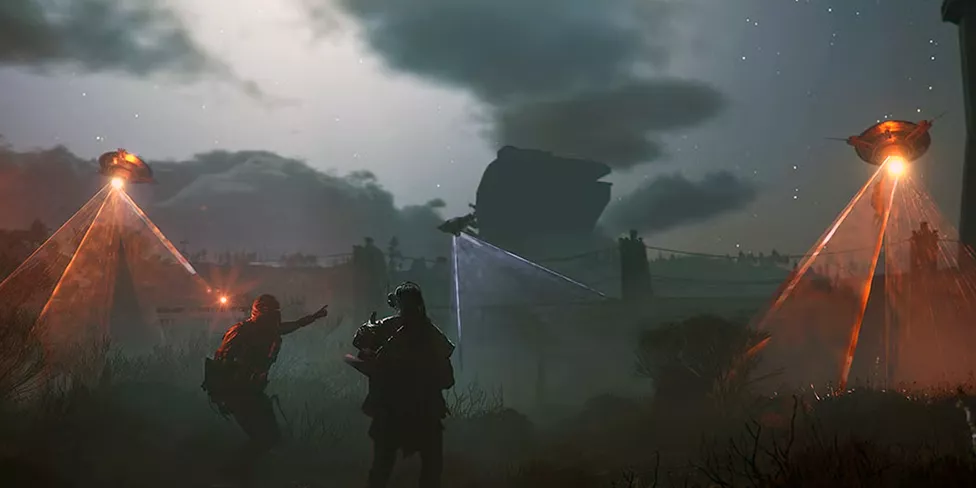
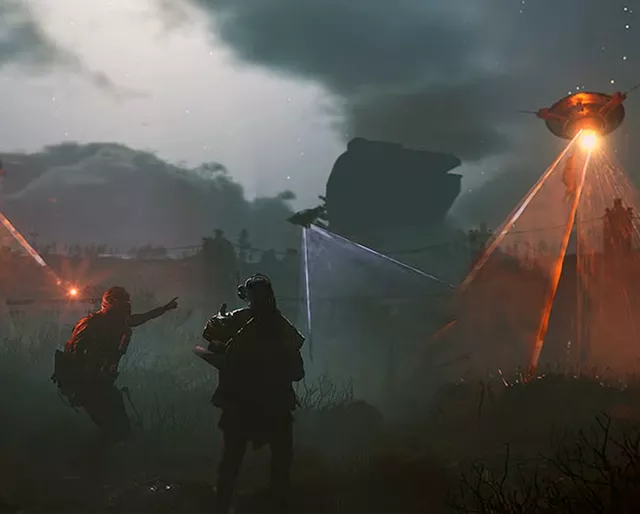
Map modifiers in Arc Raiders function as rotating environmental conditions fundamentally reshaping raid dynamics, enemy behavior patterns, and loot distribution mechanics on hourly cycles. Understanding arc raiders map modifiers strategy enables raiders to plan week-long farming schedules, allocate trial objective specialization strategically, and maximize point accumulation within constrained time windows.
The competitive meta revolves entirely around modifier scheduling. Major conditions (Night Raid, Electromagnetic Storm, Hidden Bunker) activate 2x trial multipliers lasting approximately 60 minutes before rotating to different map conditions. Successful leaderboard climbers preplan raid schedules coordinating with modifier rotations, ensuring they concentrate farming efforts exclusively during 2x windows when point efficiency multiplies exponentially.
Minor conditions (Prospecting Probes, Lush Blooms, Husk Graveyard) provide quality-of-life benefits without trial multipliers, functioning as resource farming opportunities between prime modifier windows. Understanding this tiered system prevents wasted raid hours on non-multiplier events when championship positioning demands maximum efficiency.
[banner bn_title=”UNLOCK ARC RAIDERS BLUEPRINTS FAST” bn_desc=”Skip RNG and grinding and get the exact blueprints you need.” bn_image=”https://leprestore.com/wp-content/uploads/2026/01/Banner-Test-2.png” bn_url=”https://leprestore.com/arc-raiders/all-blueprints/?utm_source=site&utm_medium=blog&utm_campaign=arc-riders&utm_content=post” bn_button_text=”Get Blueprints”]
Arc Raiders Night Raid: Complete Optimization Guide
Arc raiders night raid represents the most accessible 2x trial multiplier event, rotating regularly across all five maps (Dam Battlegrounds, Buried City, Spaceport, Blue Gate, Stella Montis) with consistent mechanics enabling skill-based point optimization.
🎯 VISIBILITY AND ENVIRONMENTAL CHANGES
Night raid completely eliminates ambient lighting, forcing raiders to depend entirely on portable flashlights revealing limited visibility cones (typically 15-20 meter radius). This darkness affects both navigation and combat proportionally – enemies cannot detect raiders beyond flashlight range with clarity equivalent to full daylight, creating tactical asymmetries rewarding positioning discipline.
Raider Hatches deactivate entirely during night raids, eliminating the emergency extraction option previously available during standard conditions. Return Points reduce from typical four extraction locations down to only two, creating dangerous chokepoint concentrations where rival raiders converge predictably. This extraction compression transforms final raid minutes into intense PvP firefights as multiple squads funnel toward identical exit routes.
🎯 ENEMY BEHAVIOR AND SPAWN DENSITY
Arc unit aggression increases dramatically during night conditions. Enemies activate at extended ranges upon hearing suppressed weapons fire, detecting unattended movement through vibration sensing, and responding to proximity triggers earlier than standard raids. Elite ARC variants (Shredders, Queens, Matriarchs) spawn with higher frequency, particularly around high-value POI zones creating dangerous engagement scenarios rewarding tactical discipline.
Arc raiders night raid optimization demands loadout specialization prioritizing suppressed weapons, stealth-focused equipment, and mobility tools enabling non-linear repositioning between objectives. High-visibility apparel becomes liability – tactical gear with minimal light reflection prevents detection at distance.
🎯 STRATEGIC ROUTE PLANNING FOR ARC RAIDERS NIGHT RAID OPTIMIZATION
Successful night raid farming begins pre-raid with detailed route planning preventing mid-engagement improvisation where teams fragment under pressure.
Pre-Raid Planning Protocol:
- Identify current night raid active map (check event timer before raid entry);
- Mark trial objective locations matching your specialization;
- Plan extraction routes avoiding known PvP hotspots;
- Verify team loadout prevents equipment redundancy;
- Establish communication protocols for low-visibility engagements.
Route optimization determines whether accumulated trial points justify raid time investment. Rather than random looting, specialized squads memorize objective spawn zones (enemy locations, supply drop coordinates, probe breach points) enabling rapid sequential completions before extraction.
🎯 LOADOUT SPECIALIZATION FOR ARC RAIDERS NIGHT RAID
Effective night raid loadouts distribute specialized equipment preventing team redundancy while ensuring collective capability coverage.
Anchor Loadout (Defensive Focus):
- Primary – Medium-range suppressed rifle maintaining 25-meter engagement accuracy;
- Secondary – Reliable sidearm for close-quarters emergencies;
- Utility – Barricades, detection avoidance tools, medical supplies.
[banner bn_title=”NO RNG. JUST BLUEPRINTS” bn_desc=”We farm Arc Raiders blueprints for you – safe and fast.” bn_image=”https://leprestore.com/wp-content/uploads/2026/01/Banner-Test-2.png” bn_url=”https://leprestore.com/arc-raiders/all-blueprints/?utm_source=site&utm_medium=blog&utm_campaign=arc-riders&utm_content=post” bn_button_text=”Unlock Now”]
Spear Loadout (Aggressive Focus):
- Primary – Suppressed short-range carbine enabling entry engagements;
- Secondary – Quick-swap secondary minimizing reload exposure;
- Utility – Offensive grenades, smoke screens, mobility stems.
Sweep Loadout (Flexible Focus):
- Primary – Versatile mid-range suppressed weapon bridging engagement ranges;
- Secondary – Fast-equipping backup for reactive situations;
- Utility – Balanced offensive/defensive tools, flares disrupting enemy targeting.
Suppressed primary weapons remain mandatory across all three roles – unsuppressed fire during night raids triggers escalating enemy responses from map perimeter, overwhelming team positions through overwhelming numerical superiority.
Arc Raiders Electromagnetic Storm Trials: Advanced Strategy
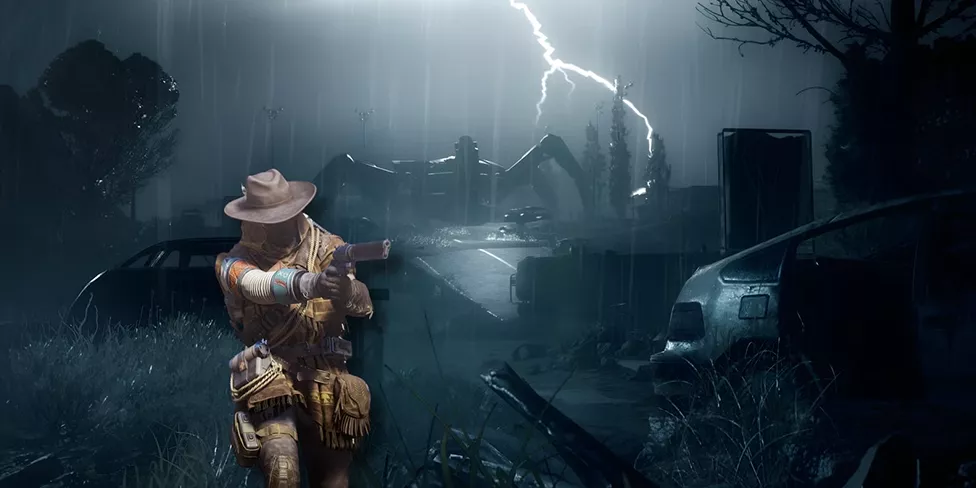
Arc raiders electromagnetic storm trials represent the highest-difficulty modifier event combining night raid darkness conditions with periodic lightning strike hazards, creating environmental chaos rewarding experienced raiders with superior trial point efficiency.
🛡️ LIGHTNING STRIKE MECHANICS AND HAZARD NAVIGATION
Arc raiders electromagnetic storm trials represent the highest-difficulty modifier event combining night raid darkness conditions with periodic lightning strike hazards, creating environmental chaos rewarding experienced raiders with superior trial point efficiency.
Lightning strikes manifest through blue ground sparkles telegraphing impact zones approximately 2-3 seconds before detonation. These strikes deal massive damage (400+ per hit) capable of instantly downing unprepared players or eliminating smaller ARC units (Leapers, Bombardiers) without direct combat engagement.
Strategic raiders exploit lightning as defensive weapon – luring aggressive ARC into spark zones enables passive enemy elimination without ammunition expenditure or personal risk exposure. Conversely, careful positioning prevents accidental self-inflicted damage when lightning strikes erupt in immediate vicinity during high-stress engagements.
🛡️ AUDIO MASKING AND TACTICAL IMPLICATIONS
Constant thunder and heavy rainfall create excellent audio camouflage masking footsteps and gunfire that normally reveal player positions at extended range. This audio disturbance paradoxically benefits both raiders and ARCs equally – teams cannot rely on auditory threat detection, demanding visual vigilance despite reduced visibility from storm conditions.
Arc raiders electromagnetic storm trials demand aggressive positioning capitalizing on reduced enemy hearing range while maintaining heightened visual alertness compensating for audio communication unreliability. Teams predetermining callout protocols and using visual signals (pings, emotes) maintain coordination effectiveness when voice communication becomes ineffective.
🛡️ EXTRACTION ROUTE PLANNING UNDER STORM CONDITIONS
Electromagnetic storms reduce Return Points identically to night raids (from four to two active extraction zones), creating dangerous convergence points. Return Point locations themselves become lightning strike targets unpredictably throughout raid duration, potentially eliminating extraction routes mid-raid and forcing dynamic rerouting toward secondary extraction points.
Pre-raid planning must include backup extraction route planning accounting for potential primary exit blockage by lightning activity. Teams maintaining mental maps of tertiary extraction routes ensure raid extraction remains viable even when primary and secondary routes become temporarily hazardous.
Prospecting Probe Events Arc Raiders Trials Optimization
Arc raiders prospecting probe events create concentrated probe spawn waves enabling rapid trial point accumulation through breach and looting mechanics without requiring combat engagement against elite ARC units.
Probe breaching mechanics generate audible alarms alerting nearby players and ARCs within substantial radius. However, probe spawn density during event windows creates abundant alternatives – if one probe location draws enemy attention, rotating to neighboring probe clusters maintains point accumulation momentum without extended combat delays.
Effective arc raiders prospecting probe events strategy prioritizes map edge locations where probe spawn density remains high while minimizing exposure to rival squad interference. Teams efficiently completing consecutive probes without engagement maintain highest point-per-minute efficiency compared to combat-focused squads spending extended time on individual engagements.
[banner bn_title=”PROGRESS FASTER WITH BLUEPRINTS” bn_desc=”Blueprints unlocked efficiently.” bn_image=”https://leprestore.com/wp-content/uploads/2026/01/Banner-Test-2.png” bn_url=”https://leprestore.com/arc-raiders/all-blueprints/?utm_source=site&utm_medium=blog&utm_campaign=arc-riders&utm_content=post” bn_button_text=”Start Now”]
Arc Raiders Modifier Schedule Planning: Competitive Timing Strategy
Successful leaderboard climbing demands understanding how arc raiders modifier schedule planning determines weekly competitive advantage through strategic raid timing.
🛡️ EVENT ROTATION WINDOWS AND UTC CONVERSION
Map modifiers rotate hourly on fixed UTC schedules published via official Arc Raiders event timers. Each modifier window lasts approximately 60 minutes before cycling to the next event type. Understanding your local time zone conversion to UTC enables scheduling raids exactly matching prime modifier windows without scheduling conflicts.
Example scheduling: If your location observes MSK timezone (UTC +3), and electromagnetic storm is active 13:00-14:00 UTC, converting to local time (16:00-17:00 MSK) enables planning your raid session during that specific window.
🛡️ WEEKLY MODIFIER FREQUENCY AND SEASONAL OPTIMIZATION
Not all modifier types rotate equally. Night raids and electromagnetic storms occupy highest-frequency slots in weekly rotation, while hidden bunker and other specialized events appear less frequently. Competitive raiders identify which modifiers appear most frequently during their typical raid hours, then structure weekly specialization around those repeating windows maximizing predictability and consistency.
Best time arc raiders trials multipliers occur during prime evening hours (typically 18:00-23:00 UTC) when modifier rotation aligns with maximum player concurrent activity, creating both competitive leaderboard intensity and abundant opponent encounters.
🛡️ MISSING MODIFIER WINDOWS: UNRECOVERABLE DISADVANTAGE
Skipping single 2x multiplier window during competitive season creates mathematically unrecoverable disadvantage. If competitors farm 40,000 points during 2x window and you skip that window, you must complete double the raid volume (achieving identical 40,000 points) at standard 1x multiplier to maintain competitive parity. Multiplied across entire season, missing even three prime windows creates cascading deficit impossible to overcome through increased grind volume later.
Arc Raiders Weather Events Leaderboard Positioning Strategy
Arc raiders weather events leaderboard positioning represents final competitive frontier where elite raiders leverage superior modifier scheduling discipline against casually-timed competitors.
During peak seasonal competition, leaderboard leaders occupy positions 1-30 through consistent 2x modifier farming during optimal windows. Players attempting to climb leaderboards through standard condition grinding find themselves permanently positioned 31-60 range (earning single-promotion per week) despite equivalent raid volume and mechanical skill.
The solution: concentrate all competitive farming exclusively during 2x multiplier windows. Skip standard conditions entirely unless farming specific resources (blueprints, upgrades) with zero competitive pressure. This deliberate approach transforms casual grinders into competitive climbers, accumulating seasonal advantage through scheduling discipline rather than mechanical execution perfection.
F.A.Q.
Does night raid provide higher trial points than electromagnetic storm?
Both provide identical 2x multiplier on all trial points earned. Electromagnetic storm presents increased difficulty through lightning hazards and audio disturbance but rewards identical point multiplier. Choose based on comfort with environmental hazards rather than point efficiency differences.
Can solo players compete during 2x multiplier events?
Technically yes, but competitive disadvantage increases exponentially. Trio squads multiply point accumulation through shared objective scoring – three players achieving identical actions earn triple points compared to solos earning single points. Solo farmers reach top-60 leaderboard placement through exceptional skill and exploit knowledge, rarely achieving top-30 consistently.
How long do 2x multiplier windows typically last?
Approximately 60 minutes per window, though variance exists based on map rotation schedules. Monitor official event timers showing countdown to next modifier change, planning raid entry 5-10 minutes before window starts, ensuring sufficient time completing raids before modifier expires.
Should squads specialize single trial objectives during modifiers or attempt all five?
Specialization yields superior results. Attempting all five objectives simultaneously dilutes focus, reducing final scores compared to teams mastering single high-value objectives per raid session. Rotate objective focus weekly enabling skill accumulation across multiple trial types seasonally.
What happens if lightning strikes kill my squad during electromagnetic storm?
Deaths result in zero trial points for that raid – extraction is mandatory for point credit. Conservative positioning maintaining distance from active spark zones prevents accidental self-elimination. Treating lightning as environmental obstacle rather than tactical opportunity prevents greedy engagement mistakes.
Do map modifier rotations differ per region?
No. All players globally experience identical UTC-based modifier rotation schedule. However, local timezone conversion affects raid scheduling alignment with your available playtime. Converting UTC times to your timezone enables optimal event window planning.
Conclusion
Arc Raiders map modifiers strategy night raids represents the foundational competitive knowledge separating casual farmers from leaderboard contenders. Success requires understanding how arc raiders night raid optimization combines visibility challenges, extraction restrictions, and enemy behavior modifications into profitable farming opportunities. Mastering arc raiders electromagnetic storm trials, recognizing 2x multiplier event importance, and implementing rigorous arc raiders modifier schedule planning determines whether raiders achieve top-30 leaderboard placement or plateau at mid-tier positions. New players beginning competitive seasonal climbs should prioritize learning current modifier rotations, identifying which 2x windows align with available playtime, and structuring entire weekly farming schedules around these prime opportunities. The arc raiders weather events leaderboard positioning advantage flows directly from scheduling discipline – elite competitors aren’t necessarily mechanically superior, but rather strategically ruthless about maximizing multiplier window exploitation through consistent planning and execution discipline.
READ MORE